Vendor Credentialing System Enterprise: What Every Facility Needs
Schedule a consultation to learn how a vendor credentialing system enterprise facilities rely on can protect your loading docks and reduce third-party risk.
by Building Intelligence
2026-07-24

Nearly twenty-nine percent of facility security breaches involve third-party vendors and contractors. Yet many enterprise operations still track vendor credentials and insurance on messy spreadsheets. This manual approach leaves docks and lobbies vulnerable to costly liabilities.
Book a demo of SV3 Enterprise to see how automated vendor credentialing can protect your loading docks and reduce third-party compliance risk.
Vendor Credentialing System Enterprise: What Every Facility Needs
What Is a Vendor Credentialing System Enterprise Facilities Need?
A vendor credentialing system enterprise operations deploy is a central digital platform that automates the collection, verification, and real-time monitoring of third-party compliance. The system checks certificates of insurance, business licenses, safety records, and background checks before any contractor can access a site. It replaces slow manual tracking with automated alerts and a complete audit trail across all locations.
Managing a large network of third-party contractors can quickly become overwhelming for facility managers. By using a vendor credentialing system enterprise solution, security teams can stop unverified vendors at the gate, keep non-lobby entry points safe, and reduce manual work for facility staff.
According to industry sources like ServiceChannel, vendor credentialing is the process of checking a third-party partner's skills, licenses, and compliance. In a busy building, this means making sure that all contractors meet safety and insurance rules before they can enter. For many years, firms managed this with paper files and spreadsheets. But manual tracking is slow and leads to errors. A digital system automates the workflow to verify records in real time. This ensures that only compliant vendors enter your property.
Core verified credentials
A complete credentialing process checks many types of records. To keep risk low, teams must review several key items before granting site access.
Certificates of insurance (COI): This confirms that a vendor has active insurance to cover any damages or accidents on site. It protects your business from liability if a contractor makes a mistake.
Business licenses: This shows that the firm has the legal right to offer services in your area. It verifies that the vendor is a real, registered business entity.
Background checks: This verifies that the staff sent to your site are safe and trusted. It checks for criminal records or other safety issues.
Safety training records: This ensures that workers know how to follow OSHA rules and handle hazards. It is vital for high-risk work like electrical or plumbing jobs.
Checking COI records and managing vendor compliance helps protect your business from costly lawsuits. This focus on safety matches national guidelines. The National Institute of Standards and Technology recommends vendor checks to protect your supply chain.
Credentialing versus vendor management
Many people confuse vendor credentialing with vendor management. While they sound alike, they serve different goals. Vendor management is a broad term. It covers how you choose partners, buy goods, and handle contracts. In contrast, credentialing is a specific safety process. It focuses only on security, risk, and compliance. It checks if a vendor is safe to do work at your site. A manager might oversee work quality. But the credentialing system decides if vendor staff can pass through the gate.
Without this check, teams often fail to secure their buildings. They may trust a vendor because they do good work. But they might miss the fact that the vendor's insurance has expired. A robust credentialing workflow closes this gap. It acts as an automated guard for your physical and digital assets.
What Information Does a Vendor Credentialing System Collect and Verify?
A vendor credentialing system collects insurance certificates, business licenses, personnel background checks, safety training records, and regulatory compliance documentation. Each document is verified in real time and monitored for expiration, ensuring that every vendor on site meets the facility's risk and safety standards.
To keep a facility secure, you must know who enters your space and what risks they bring. Using a vendor credentialing system enterprise leaders can track risk and check third-party compliance.
Insurance and business licenses
Every vendor must show proof of active insurance before doing work on your property. This is a critical step for managing vendor compliance and lowering your legal risks.
The system collects certificates of insurance to check coverage limits. It checks for general liability, workers' compensation, and auto liability. This ensures that a contractor meets your specific safety and insurance standards before they get access to the building.
The system also collects business licenses to prove the firm can work in your area. This helps you check that their state and local permits are active.
Active certificates of insurance for all work vehicles and teams
State and local business licenses to confirm legal operation
Professional trade certifications for specialized work

Personnel screening and safety training
Your security plan is only as good as the people who enter your doors. To keep your staff safe, you need to check each vendor employee. The system tracks background checks and driving records for all on-site workers. This is vital for teams that handle high-value assets or work in private spaces.
Safety training is another core part of vendor screening. If a vendor works on heavy machines or near dangerous goods, they must prove they have the right skills. The platform collects safety training records to confirm compliance.
OSHA cards and safety badges for construction or repair work
Hazmat permits for handling dangerous chemicals or waste
Site-specific safety briefings done before arrival
Regulatory compliance and monthly checks
Federal groups like the National Institute of Standards and Technology urge firms to assess all external partners. This helps protect the safety and integrity of your enterprise products and services. For sectors like healthcare, these checks are even more strict.
The National Committee for Quality Assurance (NCQA) mandates that firms run monthly checks on vendor sanctions and limitations. This constant oversight ensures that no excluded or restricted vendors can access your facility. Manual tracking cannot keep up with these rules. A dedicated software tool runs these checks automatically. It sends warnings when a license is about to expire.
Why One Expired Credential Creates Enterprise-Wide Liability
A single expired vendor credential can expose an enterprise to legal liability, regulatory fines, and security breaches. Without automated tracking, an uninsured contractor can access your site until the next manual audit, creating a window of risk that spans days or weeks.
Physical security blind spots at the loading dock
Many business plans focus only on the front lobby, but true facility security must cover every entry door. In fact, 25% of security breaches occur at non-lobby entry points such as active loading docks. When vendor tracking is weak, these back doors become open paths for unchecked guests. This risk is significant because 29% of security breaches involve third-party vendors, contractors, or delivery staff.
At active entry points, staff must check everyone who enters. A vendor with an expired badge or a lapsed contract can easily enter without notice. If a breach occurs on site, the firm faces full liability. This is why a vendor credentialing system enterprise solution is needed to watch every gate.
Compliance costs and supply chain vulnerabilities
Liability also grows from a lack of oversight in the physical supply chain. Federal rules show that poor vendor checks expose systems to deep safety risks. For example, the NIST supply chain risk management framework warns that unvetted vendors can introduce operational and physical threats. The NIST due diligence guidelines show that ongoing review is the only way to keep a facility safe.
In strict fields, the danger of a single expired credential is even greater. The National Committee for Quality Assurance (NCQA) sets strict rules for healthcare networks that require monthly sanctions monitoring of all vendor staff. If a facility misses a single monthly check, it can face severe fines.
The administrative friction of manual systems
Many enterprises still track vendor compliance and insurance by hand, using basic spreadsheets and email chains to log files. This manual method is slow, hard to manage, and full of human error. It also places a heavy office burden on the third-party providers themselves. In fact, data shows that vendor reps spend about 3.3 hours each month on compliance tasks.
Manual compliance checks also fail to provide real-time updates when files expire. A certificate of insurance can easily run out on a Saturday, but a manager might not check the log until next week. During those days, an uninsured vendor is active on-site. If a breach occurs during this window, the enterprise faces full legal exposure.
How Vendor Credentialing Integrates with Loading Dock Access Control
Integrating vendor credentialing with loading dock access control ensures that only vendors with active compliance records can schedule deliveries and pass through facility gates. This connection closes the security gap between paperwork verification and physical entry.
The operational risk of unverified dock access
Many property systems treat vendor compliance as paper tasks. They just collect files. But paper records alone do not stop an unapproved truck at your property gate. If a vendor arrives with an expired form, your team may not know until an accident happens.
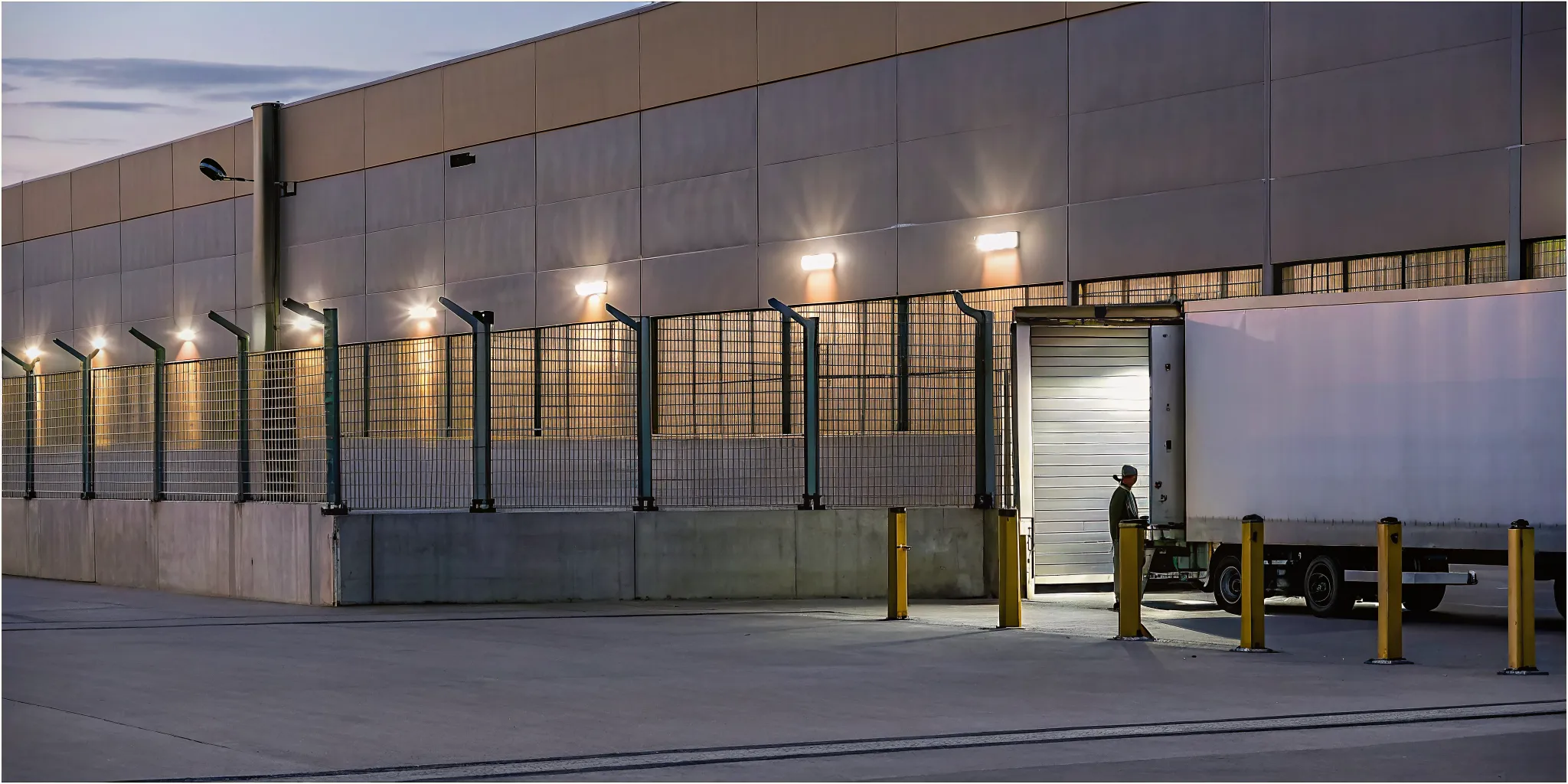
An enterprise needs more than basic software to secure its assets. True security must link compliance status directly to physical gates. This is especially critical at back-of-house entry points that lack front desks. Research shows that 25% of security breaches occur at non-lobby entry points such as loading docks.
Connecting vehicle scheduling with compliance checks
To close these gaps, facilities must link compliance to physical gates. By using an automated vendor credentialing system, enterprise operations can prevent unapproved entry in real time.
When a vendor schedules a delivery, the system checks their insurance records. If a form is expired, it flags the booking. The driver cannot book a dock slot until the vendor updates their files. This process ensures that physical entry is tied directly to active compliance.
Closing gaps with a unified system
Disjointed access processes create major security vulnerabilities. A unified system that integrates credentialing with visitor and vehicle management closes these security gaps. By combining vehicle tracking with a loading dock access control system, enterprises gain a clear view of all arrivals. This creates an audit-ready compliance trail and protects your assets.
When an auditor reviews your site, you must show clear records. Having separate spreadsheets and files makes this process slow. A digital trail proves that every vendor was compliant at the exact time of entry. This keeps your building compliant with data protection rules such as SOC 2 standards.
Schedule a demo of SV3 Enterprise to learn how automated vendor credentialing and loading dock integration can reduce third-party risk across your facilities.
How SV3 Enterprise Automates Vendor Credentialing for Large Vendor Networks
SV3 Enterprise automates the entire vendor credentialing lifecycle, from COI verification and license tracking to loading dock integration and real-time gate checks. It creates a single source of compliance truth across all facilities, eliminating manual spreadsheets and disconnected systems.
Managing many vendors across a large network is a big task. Older tools like spreadsheets, emails, and paper logs make the process slow. By using a modern vendor credentialing system enterprise facilities can protect their entry points without slowing down daily work. The SV3 platform automates these tasks to keep your facilities safe and compliant.
Centralized vendor database and COI verification
A central database is the core of any vendor credentialing system enterprise facilities use to manage risk. With SV3 Enterprise, you can collect and verify vital records in one place. The system checks certificates of insurance (COI) and business licenses before a vendor can enter. You get instant alerts when a credential is close to expiring, so vendors can update their files before they arrive.
This automated checking is not just about saving time. National standards from the National Institute of Standards and Technology highlight the need for proper supply chain risk management. By using SV3 Enterprise, your team ensures that only fully cleared third parties can access your site.
Loading dock integration and real-time gate checks
A major risk for many buildings is when different entry points use separate tools. A unified vendor management system that integrates credentialing with visitor and vehicle management closes security gaps caused by disjointed access processes. SV3 connects vendor records directly with loading dock scheduling. This link ensures that a truck driver cannot book a dock slot or pass the gate unless their firm has active files. For more details on choosing the right platform, check our enterprise vendor management buyer's guide.
This deep connection helps your guards work fast. When a vendor arrives, the guard scans their ID or license plate. The system checks the database in real time to confirm approvals. If the vendor is clear, they get access. If a COI is expired, the system alerts the guard. This quick check prevents unsafe access at all entry points.
Audit-ready compliance reports and safety standards
Security leaders must prove that their sites are safe and compliant. Enterprise-grade vendor credentialing systems must give a clear audit trail to support data protection rules such as SOC 2. SV3 logs every entry, exit, and file check. This log gives you a clear audit trail that is always ready for review. You can run reports in seconds to show compliance to building owners or safety boards.
This focus on top-tier safety is why SV3 stands out. It is the only cloud-based visitor and vehicle management system with DHS SAFETY Act certification. This certification gives you a trusted tool to keep your whole site safe.
Enterprise Benefits of a Centralized Vendor Credentialing System
A centralized vendor credentialing system eliminates the inefficiencies of manual spreadsheets, reduces compliance risk with automated monitoring. And gives security teams real-time visibility into vendor compliance status across all facilities.
Tracking vendors at many sites is hard. A central vendor credentialing system keeps all data in one place. This tool gives security teams a single source of truth for compliance. When you bring all files to one portal, you stop relying on messy spreadsheets and emails.
How the system helps
Manual work takes too much time and leads to mistakes. Checking insurance papers and licenses by hand is slow. Automating these tasks reduces manual processing time and stops work delays. This change frees up your staff for other vital security tasks.
An enterprise-grade vendor credentialing system provides clear perks for large buildings.
Real-time status views: Guard teams can check vendor status at any gate or lobby.
Auto alerts: The system sends email alerts to vendors before their files expire.
Less desk work: Automation cuts manual data entry and saves hours of work.
Fewer delays: Vendors upload their own files to a portal, which cuts down on phone calls.
Capability | Manual Process | Automated System |
|---|---|---|
Insurance verification | Paper COI reviewed by hand | Digital COI checked in real time |
Expiration tracking | Staff check dates in a spreadsheet | System sends alerts before expiry |
Loading dock access | Guard checks forms at the gate | System blocks expired vendors at booking |
Audit preparation | Staff spend days gathering files | Reports generated in minutes |
Multi-site compliance | Each site tracks vendors separately | Central dashboard for all locations |
Reducing third-party risk at scale
For enterprises managing hundreds of vendors across multiple locations, a manual approach simply does not scale. A vendor credentialing system enterprise platform like SV3 provides consistent enforcement of compliance rules across all sites. Automated workflows ensure that every vendor, from a solo electrician to a national maintenance contractor, meets the same verification standards before setting foot on your property. This consistency reduces third-party risk and protects your enterprise from supply chain vulnerabilities.
Frequently Asked Questions
What is the difference between vendor credentialing and vendor management?
Vendor credentialing focuses specifically on verifying safety, insurance, and compliance before granting site access. Vendor management is a broader process that covers contract negotiation, performance tracking, and relationship management. Credentialing is the security gate; management is the ongoing business relationship.
How often should vendor credentials be checked?
Credentials should be verified before initial site access and monitored continuously after that. Industry standards such as NCQA recommend monthly sanctions checks, while certificates of insurance should be verified in real time at each access event. Automated systems handle this continuous monitoring without manual effort.
Can a vendor credentialing system integrate with existing access control hardware?
Yes. Modern vendor credentialing platforms like SV3 connect with loading dock scheduling systems, visitor management kiosks, and electronic gate controls. This integration ensures that compliance status determines physical access in real time, without requiring separate manual checks at each entry point.
What types of organizations need a vendor credentialing system?
Any organization that regularly hosts third-party contractors, delivery personnel, or service vendors on site can benefit from vendor credentialing. This includes commercial real estate properties, manufacturing plants, healthcare facilities, corporate campuses, and event venues with large vendor networks.
Schedule a demo of SV3 Enterprise to see how automated vendor credentialing can protect your facilities and reduce third-party compliance risk.
