A Guide to Truck Appointment Scheduling Software
Truck appointment scheduling software streamlines dock operations, reduces congestion, and gives you real-time visibility into every vehicle arrival.
by Building Intelligence Team
2025-07-16
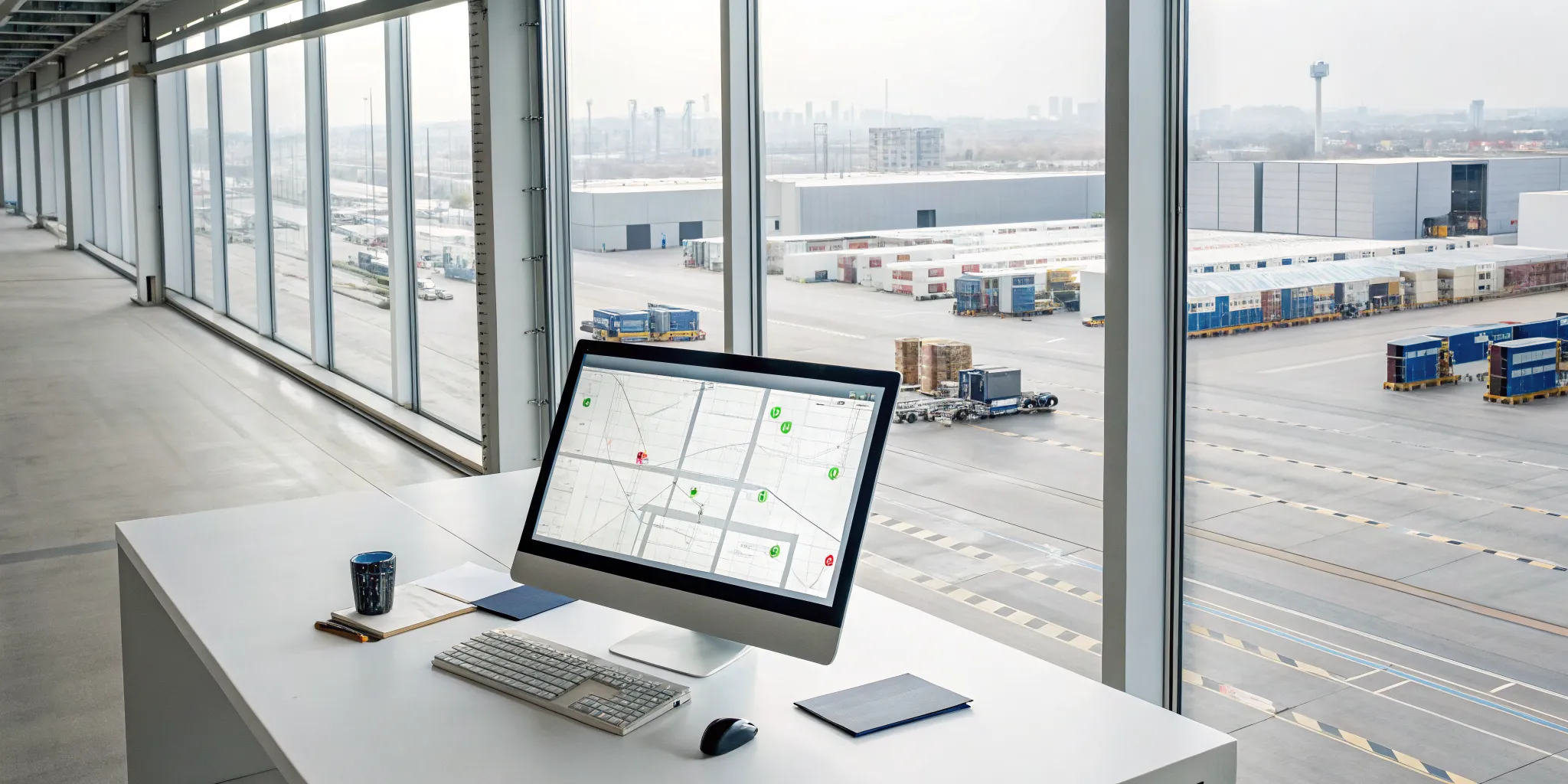
Think about the security in your building’s lobby: digital check-ins, pre-registration, and badged access create a controlled environment. Now, picture your loading dock. If you see clipboards, radio chatter, and handwritten logs, you have a major security gap. Every vehicle arrival is an entry point, and without a verifiable system, you’re operating with a blind spot. **Truck appointment scheduling software** closes this gap by bringing the same level of governance from your front door to your back of house. It creates a complete, auditable record of every arrival, ensuring only approved vehicles gain access to your property.
## Key Takeaways
* **Ditch manual scheduling to cut hidden costs**: Your reliance on phone calls and spreadsheets is likely causing expensive driver detention fees, dock congestion, and significant security gaps. Moving to a digital system eliminates these issues by creating a predictable and auditable workflow.
* **Centralize arrivals for total operational control**: The right software gives you a single dashboard to see every scheduled appointment and live arrival. By providing a self-service portal for carriers, you eliminate back-and-forth communication and give your team a complete, real-time view of all loading dock activity.
* **Focus on flexibility when choosing a partner**: Don't overpay for a rigid, one-size-fits-all system. Identify your specific bottlenecks and must-have features first, then look for a provider who can tailor a solution to your building's unique workflow, security standards, and scale.
## What Is Truck Appointment Scheduling Software?
If your loading dock runs on phone calls, emails, and spreadsheets, you know how quickly things can descend into chaos. Truck appointment scheduling software is a digital tool that replaces that manual guesswork with a streamlined, predictable system. At its core, this software helps you manage the flow of all commercial vehicles arriving at your property, from delivery trucks and contractor vans to service vehicles. It creates a single, organized calendar for your loading docks, gates, and service bays.
Instead of fielding constant calls or deciphering messy email chains, you provide your carriers and vendors with a simple way to book their own arrival times based on your availability. This brings much-needed order to your [vehicle management](https://buildingintelligence.com/visitor-management-software/vehicle-management/) process, giving your team a clear view of who is scheduled to arrive and when. The goal is to transform your loading dock from a source of congestion and frustration into a smooth, efficient, and secure entry point. It’s about taking control of your operations and ensuring every arrival is accounted for before it even happens.
### How It Works
The process is refreshingly straightforward. First, your operations team sets up the rules of engagement in the software. You define your operating hours, the capacity of each dock or bay, and the duration of a typical appointment. This creates a digital framework of available time slots. From there, your carriers, suppliers, or tenants can access a simple online portal to schedule their own appointments. They see what times are open and select the one that fits their schedule, eliminating the back-and-forth. Once booked, the system automatically confirms the appointment and can share important arrival instructions. This self-service approach not only saves your team hours of administrative work but also empowers your drivers with the information they need for a smooth drop-off.
### Who Needs It?
You might think this kind of system is only for massive distribution centers, but that’s a common misconception. Any facility that struggles with dock congestion, driver wait times, or a lack of visibility can benefit. This includes multi-tenant commercial buildings managing tenant move-ins, hospitals coordinating medical supply deliveries, and corporate campuses handling everything from food service shipments to IT equipment drop-offs. If you’re running a property with even a handful of daily truck arrivals, you’re likely feeling the pain of manual scheduling. This software is for any operations or security leader who needs a reliable way to manage the full lifecycle of [vendor and contractor arrivals](https://buildingintelligence.com/visitor-management-software/vendor-management/), ensuring security and efficiency from the moment an appointment is booked.
## The True Cost of Manual Truck Scheduling
If your loading dock still runs on phone calls, emails, and spreadsheets, you’re likely paying a higher price than you think. The costs of manual scheduling go far beyond a few minutes of wasted time. These outdated methods create operational friction that ripples through your entire facility, impacting driver relationships, team morale, and your bottom line. The constant back-and-forth, lack of real-time information, and inevitable human errors add up, creating significant security gaps and financial drains that are often hidden in plain sight. It’s a system that works right up until the moment it doesn’t, leaving your team scrambling to manage the fallout.
### Dock Congestion and Driver Delays
We’ve all seen it: a long line of trucks idling outside the gate, with frustrated drivers waiting for a turn at the dock. Manual scheduling is a major cause of this congestion. When your team is juggling appointments by phone or email, it’s nearly impossible to create an efficient flow. You end up with double-bookings during peak hours and empty, unused dock doors during lulls. This unpredictability leads directly to costly driver detention fees and damages your reputation with carriers, who may start avoiding your facility altogether. Even the most organized paper-based system can’t adapt to real-world issues like staff shortages or traffic delays, often making a bad situation worse.
### Lack of Visibility and Accountability
Who approved this delivery? Why is this truck here two hours early? With a manual system, getting answers to these questions is a frustrating scavenger hunt through email chains and handwritten logs. Without a centralized platform, there is no single source of truth for your loading dock activity. This lack of visibility makes it impossible to track performance, identify recurring bottlenecks, or hold anyone accountable for scheduling conflicts. More importantly, it creates a significant security vulnerability. A clear, auditable record of every scheduled arrival is fundamental to modern [vehicle management](https://buildingintelligence.com/visitor-management-software/vehicle-management/), ensuring you know exactly who is coming to your property and why.
### The Hidden Price of Scheduling Errors
A simple typo in a spreadsheet or a misheard appointment time can derail your entire day’s schedule. These small human errors are inevitable in any manual process, and they create chaos for everyone involved. Your on-site team wastes valuable time trying to sort out the confusion, while drivers are left waiting for instructions. Some facilities try to solve this by adopting software, but they end up paying for complex enterprise systems with features they’ll never use. This is another hidden cost: overpaying for a solution that isn’t tailored to your actual operational needs. The right approach involves finding a flexible [vendor management](https://buildingintelligence.com/visitor-management-software/vendor-management/) tool that fits your workflow, not forcing your workflow to fit a rigid, oversized system.
## Must-Have Features for Truck Scheduling Software
When you start looking at truck scheduling software, the sheer number of features can feel overwhelming. It’s easy to get distracted by flashy extras that don’t solve your core problems. The key is to focus on the capabilities that will make a tangible difference in your day-to-day operations, from reducing dock congestion to tightening security. Think of this as your non-negotiable checklist. The right platform won’t just be a digital calendar; it will be an integrated command center for your entire loading dock and yard.
A great system gives you control over your operations while empowering your carriers to be part of the solution. It replaces chaotic phone calls and messy email chains with a streamlined, self-service process. More importantly, it connects the dots between a scheduled appointment and the physical arrival of a vehicle. This means having a system that can digitally check in a driver, grant access, track their movement on-site, and provide a complete audit trail of their visit. The goal is to find a solution that offers a single source of truth for every [vehicle arrival](https://buildingintelligence.com/visitor-management-software/vehicle-management/), bringing the same level of security and efficiency you have in your lobby to your loading dock. Below are the essential features that make this possible.
### Self-Service Scheduling for Carriers
The days of your team being tied to the phone to manage truck arrivals are over. A top-tier scheduling system must include a self-service portal for carriers. This allows drivers or dispatchers to see your available time slots and book their own appointments without ever needing to contact your staff. You maintain full control by setting the rules in the background, defining available hours, appointment durations, and specific dock capabilities. This simple shift empowers carriers, reduces no-shows, and eliminates the back-and-forth communication that eats up your team’s valuable time. It puts the responsibility on the carrier to book a time that works, freeing your staff to focus on managing the dock, not the schedule.
### Digital Check-In and Automated Permitting
A scheduled appointment is only the first step; the arrival process needs to be just as smooth. Look for software that offers digital check-in capabilities, allowing drivers to sign in from their smartphones or an on-site kiosk. This eliminates paper logbooks and long lines, capturing accurate arrival times automatically. Once a driver checks in, the system should instantly verify their appointment and issue a digital permit for entry. This automated process ensures that only approved [vendors and vehicles](https://buildingintelligence.com/visitor-management-software/vendor-management/) are granted access to your property. It’s a simple way to strengthen security and create a frictionless, professional experience for every driver who arrives at your facility.
### Integrated Yard and Vehicle Management
Your visibility shouldn't end at the dock door. Knowing a truck is scheduled to arrive is one thing, but knowing exactly where it is on your property is another. That’s why integrated yard management is a must-have. The software should provide a real-time overview of your entire yard, showing which trucks are checked in and waiting, which are currently at a dock, and how long each vehicle has been on-site. This bird's-eye view allows your team to direct traffic efficiently, prevent bottlenecks, and quickly identify any trucks that have overstayed their allotted time. True [vehicle management](https://buildingintelligence.com/visitor-management-software/vehicle-management/) gives you complete operational awareness from the gate to the dock and back again.
### Real-Time Dashboards and Audit Trails
To truly manage your loading dock, you need clear, immediate insight into what’s happening. A real-time dashboard is essential, giving you and your security team a single screen to monitor all activity. You should be able to see scheduled appointments, live check-ins, loading progress, and any exceptions or delays at a glance. Just as important is the comprehensive audit trail running in the background. Every action, from the moment an appointment is booked to the second a truck leaves, should be time-stamped and logged. This creates an indisputable record that is invaluable for security investigations, compliance reporting, and resolving disputes with carriers.
### Performance Analytics and Reporting
Good software doesn't just show you what's happening now; it helps you understand your operations over time so you can make them better. Your truck scheduling system should include robust analytics and reporting tools. These features transform raw data into actionable insights. You can track key performance indicators (KPIs) like carrier on-time percentages, average dock turnaround times, and peak congestion hours. With this information, you can have data-driven conversations with underperforming carriers, adjust staffing based on demand, and optimize your scheduling rules to improve overall efficiency. It’s about moving from constantly putting out fires to proactively fine-tuning your operations.
### Seamless System Integrations (WMS, TMS)
Your truck scheduling software can't operate in a silo. To avoid creating more work for your team, it must integrate seamlessly with the other systems you rely on, like your Warehouse Management System (WMS), Transportation Management System (TMS), or access control platform. A solution with a flexible API or pre-built integrations makes this possible. This connectivity ensures that data flows automatically between systems, eliminating manual data entry and reducing the risk of human error. A smooth integration process also means a faster, less costly implementation, allowing your [arrival management platform](https://www.buildingintelligence.com/) to start delivering value right away without a major IT headache.
## How Truck Scheduling Software Transforms Your Operations
Moving from a manual scheduling system to a dedicated software platform is more than just a simple upgrade; it’s a fundamental shift in how you manage your property’s logistics. When your loading dock runs on phone calls, emails, and spreadsheets, you’re constantly in a reactive mode, putting out fires as they appear. A driver is late, a delivery is unexpected, or two trucks show up for the same time slot, and your team has to scramble. This creates a ripple effect of delays, frustration, and security gaps that can be felt across your entire operation.
Adopting truck scheduling software allows you to move from chaos to control. Instead of reacting to problems, you can prevent them from happening in the first place. By creating a centralized, automated system for all vehicle arrivals, you establish a clear, predictable workflow for carriers, drivers, and your on-site staff. This transformation doesn’t just make life easier for your dock master. It delivers measurable improvements in efficiency, strengthens your security posture, and provides the critical data you need to make smarter operational decisions. It’s about turning your loading dock from a source of constant headaches into a streamlined, secure, and well-managed asset. With the right [vehicle management](https://buildingintelligence.com/visitor-management-software/vehicle-management/) system, you gain complete command over one of your building’s most critical access points.
### Reduce Dock Congestion and Turnaround Time
One of the most immediate benefits of a truck scheduling system is the end of traffic jams at your gate and loading dock. When carriers can book their own appointments in an open slot, it eliminates double bookings and unpredictable arrival times. This organized approach means drivers aren't stuck waiting in long queues, which significantly cuts down on costly detention fees and improves your relationship with carriers. Digital check-ins replace manual paperwork, getting drivers processed and on their way faster. With a clear schedule and quicker turnarounds, your team can handle more volume without feeling overwhelmed, creating a smooth and efficient flow of traffic from arrival to departure.
### Strengthen Security and Maintain Compliance
Your loading dock is just as critical to secure as your front lobby. Truck scheduling software replaces the anonymity of paper logs with a verifiable digital record of every vehicle and driver that accesses your property. You can require carriers to upload necessary documentation, like insurance certificates or permits, before an appointment is even confirmed. This ensures every arriving vehicle is pre-vetted and compliant with your building’s policies. This digital audit trail, which includes exact arrival and departure times, is invaluable for incident investigations and security reporting. By integrating [vendor management software](https://buildingintelligence.com/visitor-management-software/vendor-management/), you create a robust security layer that protects your property, assets, and people.
### Gain a Single Source of Truth for All Arrivals
Fragmented systems like radios, clipboards, and separate spreadsheets create information silos that prevent you from seeing the full picture of your operations. A truck scheduling platform consolidates every appointment, delivery detail, and vehicle movement into one centralized dashboard. This single source of truth gives security and operations leaders real-time visibility into everything happening at the loading dock. You can track performance, identify recurring bottlenecks, and analyze trends over time. This data-driven insight is essential for optimizing staffing, allocating resources effectively, and making strategic decisions that improve your entire [visitor management](https://buildingintelligence.com/visitor-management-software/visitor-management/) ecosystem. It’s the key to understanding how your building truly operates.
## How to Choose the Right Truck Scheduling Partner
Selecting the right software is about more than just features; it’s about finding a partner who understands your operational challenges and can help you solve them. A great partner will offer a solution that not only streamlines your loading dock but also integrates with your building’s entire security ecosystem. The right choice will save you time, reduce costs, and give you a clear, comprehensive view of every vehicle arrival. To find that perfect fit, you need a clear evaluation process. Start by looking inward at your own operations, then use that knowledge to vet potential providers.
### Assess Your Current Operational Bottlenecks
Before you even look at a single software platform, take a hard look at your loading dock’s daily reality. Where are the sticking points? Are drivers waiting in long lines? Is your team constantly on the phone confirming appointments? Document everything: your average daily truck volume, peak traffic hours, and the most common reasons for delays. Many facilities handling a moderate number of trucks, say 5 to 20 a day, often overpay for complex systems with features they don’t need. Understanding your specific scale and pain points helps you identify what’s truly essential for your [vehicle management](https://buildingintelligence.com/visitor-management-software/vehicle-management/) strategy and prevents you from buying a system designed for a massive distribution center when you’re not one.
### Prioritize Must-Have vs. Nice-to-Have Features
Once you’ve identified your bottlenecks, you can translate them into a feature list. Separate this list into two columns: “must-haves” and “nice-to-haves.” Must-haves are the non-negotiable features that directly solve your biggest problems, like self-service appointment booking for carriers or real-time dock visibility for your team. Nice-to-haves might include advanced analytics or custom reporting that would be useful but aren't critical for day-one success. Paying for an enterprise-level suite when you only have 15 trucks a day is like buying a semi-truck to make local deliveries. This simple exercise focuses your search and ensures you invest in a solution that fits your needs and your budget, especially when managing different types of [vendor arrivals](https://buildingintelligence.com/visitor-management-software/vendor-management/).
### Look for a Partner, Not Just a Provider
A software provider sells you a product. A partner invests in your success. As you evaluate options, look for a team that wants to understand your unique workflow. Can their system manage both pre-scheduled deliveries and unexpected walk-up arrivals? How will it integrate with your existing security protocols, like your lobby’s [visitor management](https://buildingintelligence.com/visitor-management-software/visitor-management/) system? A true partner offers a unified platform that brings your front door and your loading dock under the same governance. They should be more interested in solving your logistical puzzles than just closing a deal. This collaborative approach is the difference between buying software and building a long-term operational solution.
### Request a Demo Tailored to Your Workflow
A generic, one-size-fits-all demo won’t tell you what you need to know. When you’re ready to see the software in action, insist on a demonstration that is tailored to your specific challenges. Share your list of bottlenecks and must-have features with the sales team beforehand and ask them to show you exactly how their platform would address each one. For example, you could say, “We have issues with carriers arriving off-schedule. Show me how your system handles that.” Many companies offer free trials, which can be a great way to test the software with your own team. A partner who is confident in their solution will be happy to prove its value in the context of your real-world operations.
## Understanding Software Pricing Models
Figuring out the cost of truck scheduling software can feel a bit like peeling an onion. The price you see on a website is rarely the full story. To make a smart investment, you need to look past the monthly subscription fee and understand the different pricing models, what’s included, and where potential extra costs might hide. This will help you find a solution that provides real value for your specific operational needs, not just the cheapest option on the market.
### What to Expect from Standard Subscription Tiers
When you start your search, you’ll find many dock scheduling solutions offer tiered subscriptions, often priced per facility. Some basic plans for smaller businesses can seem very affordable, but they usually come with significant limitations. These entry-level tiers might offer simple appointment booking but lack the robust security, integration, and analytics features a complex property requires. If your operation manages a steady flow of vehicles, opting for a bare-bones plan is like using a walkie-talkie when you need a central command center. You’ll want to find a platform that provides comprehensive [vehicle management](https://buildingintelligence.com/visitor-management-software/vehicle-management/) without forcing you into an enterprise rate designed for a massive fleet if it doesn't fit your scale.
### Factoring in Enterprise and Implementation Costs
For larger or more complex properties, an enterprise-level platform is often the right move. These systems offer powerful, customized solutions, but it’s important to have a clear picture of the total investment. Beyond the subscription, you should account for one-time implementation fees, the cost of your IT team’s time for any integration work, and training for your staff. A good provider will be transparent about these expenses and guide you through the process. Think of it as an investment in building a foundational operating system for your property. The goal is to create a single source of truth for every arrival, and that setup process is key to long-term success.
### Watch Out for These Hidden Fees
One of the easiest ways to overspend is by paying for features you’ll never use. Some software providers bundle dozens of capabilities into a single, expensive package, forcing you to pay for tools that aren’t relevant to your workflow. Before you sign a contract, ask for a detailed breakdown of what’s included. A flexible partner will work with you to configure a solution that matches your exact needs, whether that’s just managing deliveries or creating a unified system for [vendor management](https://buildingintelligence.com/visitor-management-software/vendor-management/) and visitor arrivals. The right software should adapt to your building’s operations, not the other way around.
## Evaluating Software: What Matters Most?
Once you have a shortlist of potential software partners, it’s time to look closer. Beyond the flashy features and sales pitches, you need to evaluate each option against the core requirements of your operation. The right software doesn't just solve a scheduling problem; it becomes a seamless part of your security and operational framework. Focus on these four critical areas to ensure you’re making a choice that will serve you well for years to come.
### SAFETY Act Certification and Security Standards
In a landscape of increasing digital threats, the security of your data is not just an IT concern, it's a fundamental business requirement. Your scheduling software will handle sensitive information about your property, your carriers, and your operations. It’s essential that this data is protected. Look for platforms that can demonstrate a serious commitment to security, including compliance with recognized industry standards. For properties in the United States, a [SAFETY Act certification](https://www.safetyact.gov/) from the Department of Homeland Security provides the highest level of liability protection, signaling that the technology has been vetted for its effectiveness in preventing and responding to acts of terrorism.
### Scalability Across Your Entire Portfolio
Your operational needs will change over time. You might expand to new properties, or the volume at a single site could grow significantly. Your software needs to be able to scale with you. Be wary of rigid, one-size-fits-all pricing that forces you to pay enterprise rates for a mid-sized operation. The ideal partner offers flexible tiers that can support a single loading dock with a dozen daily arrivals or an entire portfolio with complex [vehicle management](https://buildingintelligence.com/visitor-management-software/vehicle-management/) needs. This ensures you only pay for what you use while having a clear path for growth without needing to switch providers.
### Ease of Use for Your Drivers and On-Site Teams
The most sophisticated software is worthless if your team and your carriers won’t use it. A complicated interface, a confusing check-in process, or a clunky mobile app will create more problems than it solves. The goal is to simplify operations, not add another layer of frustration. Look for a clean, intuitive user interface that provides clear visibility for your on-site staff. For carriers and drivers, the process should be straightforward, reducing friction and encouraging adoption. When you request a demo, make sure the software works for the people who will use it every day, from your security guards to your [vendor partners](https://buildingintelligence.com/visitor-management-software/vendor-management/).
### Flexibility to Match Your Unique Operations
Every building has its own unique rhythm and set of rules. A hospital has different security needs than a manufacturing plant, and a multi-tenant commercial tower operates differently than a convention center. Your scheduling software should be flexible enough to adapt to your specific workflows, not the other way around. Can you create custom fields, set specific rules for different dock doors, or manage various types of arrivals beyond just trucks? A truly flexible platform allows you to manage appointments, deliveries, and [visitor access](https://buildingintelligence.com/visitor-management-software/visitor-management/) in a way that fits how your building actually runs, giving you a configurable tool instead of a rigid system.
## Is Your Loading Dock as Secure as Your Lobby?
Think about your building’s lobby. You likely have a sophisticated system in place: digital check-ins, pre-registration for guests, and badged access points. It’s a controlled, secure environment. Now, picture your loading dock. If you see a jumble of clipboards, a constant stream of radio chatter, and a reliance on phone calls to manage arrivals, you’re not alone. For many properties, the loading dock operates in a completely different world from the front door, creating a significant security gap.
This isn't just about being disorganized. Every truck, vendor, and contractor that arrives at your dock is an entry point to your facility. When your scheduling process relies on fragmented methods like emails and phone calls, you’re operating with a major blind spot. As many truckers will tell you, it's common for warehouses to use everything from custom legacy software to simple phone calls to book appointments, leaving a messy and unauditable trail of who was on your property and when. Without a secure, centralized process, you have no way to verify appointments, track arrivals, or maintain a clear record for compliance.
The good news is that you can extend the same level of security you have in the front to the back of your house. Modern [vehicle management](https://buildingintelligence.com/visitor-management-software/vehicle-management/) software brings your loading dock into the 21st century. Instead of a paper log, you get a verifiable digital audit trail for every vehicle. Instead of guessing who is on-site, you gain real-time visibility into every arrival and departure. This allows you to enforce compliance, prevent unauthorized access, and ensure every vehicle has a legitimate reason to be there.
This isn't about adding more complicated steps; it's about creating clarity and control. When you have a single, unified system for every person and vehicle, you can spot irregularities and ensure only approved arrivals gain access. It’s the same principle behind your lobby’s [visitor management software](https://buildingintelligence.com/visitor-management-software/visitor-management/), just applied to a different, equally critical part of your building. A secure dock is an efficient dock, one that protects your assets, your people, and your bottom line.
## Frequently Asked Questions
**We only get about 10 trucks a day. Isn't this kind of software overkill for us?**
That’s a very common question, and the answer is almost always no. The chaos of manual scheduling isn't about volume; it's about a lack of control. Even with just a few trucks, you can still have double-bookings, unexpected arrivals that disrupt your team, and no clear record of who is on your property. This software provides a predictable, professional system that eliminates those headaches, strengthens security, and gives your team their time back, regardless of whether you have 10 or 100 arrivals.
**How is this better than just using a shared digital calendar for appointments?**
Think of it this way: a shared calendar is like a simple notepad, while truck scheduling software is a complete operational command center. A calendar can tell you when a truck is supposed to show up, but that’s where its job ends. A proper platform manages the entire lifecycle of the visit. It can verify the carrier, automate the check-in process, provide a real-time view of which vehicles are on-site, and create a permanent, searchable audit trail for security and compliance.
**Will our carriers and drivers actually use a new system? We don't want to create more friction for them.**
This is a crucial point, and the best systems are designed with the driver in mind. Instead of creating friction, a self-service portal actually removes it. Drivers and dispatchers can see all available time slots and book what works for them, eliminating phone tag and uncertainty. Features like digital check-in also mean they spend less time waiting in line with paperwork and more time getting their job done. When the system makes their life easier, adoption happens naturally.
**What's the most important thing to consider when choosing a provider?**
Beyond a checklist of features, you should look for a true partner, not just a software vendor. A partner will take the time to understand your building's unique workflow, from your security protocols to your specific types of vehicle traffic. They will offer a flexible solution that can be configured to your needs and integrate with your other systems, like lobby visitor management. The goal is to find a team invested in solving your operational challenges for the long term.
**You mention the SAFETY Act. Why is that important for scheduling software?**
The SAFETY Act certification is a significant seal of approval from the U.S. Department of Homeland Security. It means the technology has been thoroughly reviewed and validated for its effectiveness in helping prevent and respond to potential security threats. For you, this provides a powerful layer of liability protection. It’s a clear indicator that you are using a vetted, top-tier security tool to manage one of your property’s most critical access points.
