What Three Days at IAVM VenueConnect Taught Us About the Loading Dock
I spent last week at VenueConnect, and I went with a specific question: how do venue operators actually manage the people, vehicles, and vendors coming through their back of house today? The answer, over and over, was some version of the same thing. Paper. Radios. A binder. A guy named Steve who knows everybody. What surprised me wasn't that the answer was manual. It was how calmly everyone said it. Nobody described their dock process as a crisis. They described it the way you'd describe your commute — a known quantity, worked around, fine.
by Dan Seeley
2026-08-10
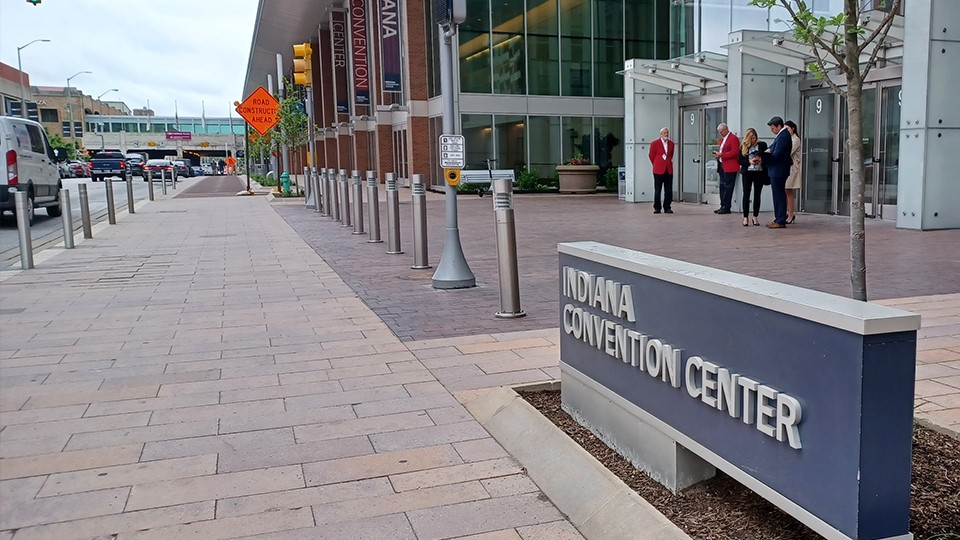
Manual works, right up until it doesn't:
If you run a single dock, book twelve events a month, and have the same three people on staff who've been there nine years, a clipboard is not a broken system. It's a proportionate one. Anyone who tells you otherwise is selling something.
So the honest question isn't "why haven't you automated this?" It's: what changes that?
From the conversations I had, three things do:
Something happens. A contractor gets hurt on your dock. A vehicle is somewhere it shouldn't be. Someone asks, six weeks later, who authorized that person to be in that corridor at 6:40 in the morning — and the answer lives in a radio call nobody recorded. The cost of a manual process isn't measured on a normal day. It's measured on the one day you need a defensible record and don't have one.
A requirement arrives from outside. An insurer, a municipality, a tenant's corporate security team, an anchor promoter. These mandates rarely ask whether your current process is working. They ask you to produce evidence.
Your people leave. When the process lives in someone's head, turnover doesn't just cost you a headcount. It costs you the operation. Tribal knowledge is efficient and completely fragile, and the venues I talked to are staffing in the tightest labor market in years.
None of those are efficiency arguments. They're risk arguments. That reframing was the single most useful thing I took away from the week.
What the sessions actually said:
AI is arriving in venue operations faster than the guardrails are. The AI-for-events session drew a good crowd and covered real ground. Data privacy and security came up — but briefly, and without much weight given the room. When your audience is operators handling visitor PII at scale, I'd want that to be a larger share of the hour than it was. The presenters did land one framing I'd underline: use trusted enterprise software for the critical, deterministic work, and treat AI as the layer around it. That's exactly right. You want AI helping your team summarize, flag anomalies, and find information. You do not want a probabilistic system deciding who gets through a door, and you do not want visitor PII in a tool nobody vetted.
SOP storage is a live pain point. This came up unprompted in the Convention Centers Town Hall: much of the sector is still running procedure out of physical binders, with clear appetite for searchable repositories and QR-code access at the point of need. Same underlying problem as the dock, one floor up. Critical operational knowledge in a format that can't be searched, audited, or handed off.
Some venues now come in multiples. The Next Gen Sports & Entertainment Districts session made clear these projects are being sold to cities as economic development and urban transformation, with long multi-phase planning horizons. If you're planning a multi-venue campus, credentialing and access architecture is a design decision, not a procurement decision you make eighteen months before ribbon-cutting.
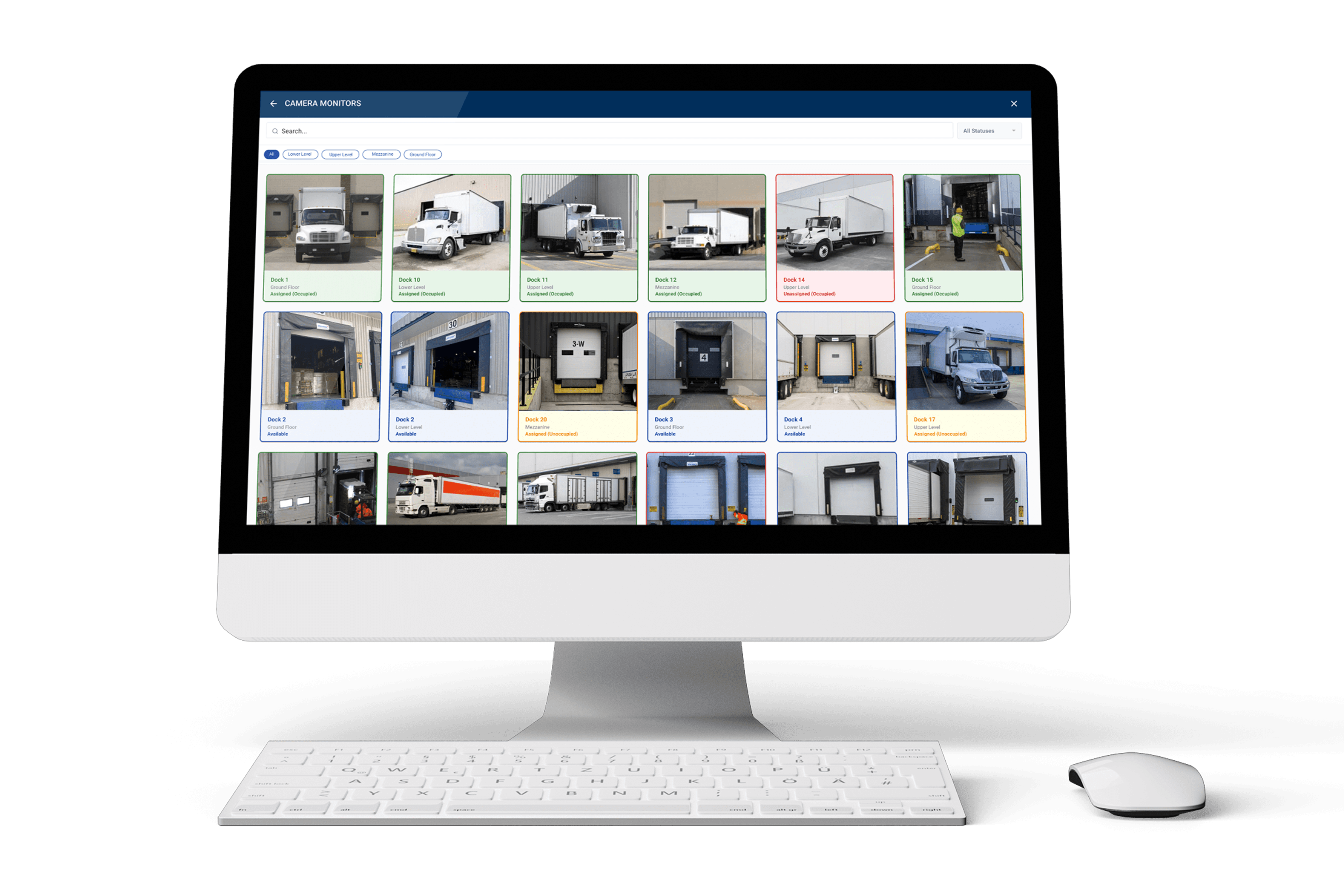
Where SV360 fits:
We build SV360 for exactly the gap between "manual works" and "manual just cost us." It manages visitors, vehicles, and vendors across what we call the arrival lifecycle — Schedule → Authorize → Admit → Track → Exit — as one connected record rather than five disconnected ones.
Concretely, in a venue environment that means:
• Scheduled and day-of arrivals. Pre-book an arrival window with dock assignment and the driver and vehicle known before the gate — or, when a truck shows up unannounced, the driver fills out a short form on the spot, which creates the record and routes it for approval. Unscheduled doesn't have to mean undocumented.
• Bulk vendor and exhibitor credentialing built for the handoff from a general service contractor. Pre-register a contractor roster, validate insurance and requirements before anybody travels, issue credentials that expire when the show does.
• A timestamped, defensible record of who was on your property, when, on whose authorization, escorted by whom. This is the answer to the six-weeks-later question.
• Integrations that meet your setup where it is — access control, cameras, license plate recognition, and sensors. A guard with an iPad at the gate works from day one; for facilities investing in that technology, the same workflow becomes a fully automated, hands-off arrival. Either way it's one process, not a second one running alongside the systems you already own.
• Process that lives in the system, not in a binder or in Steve's head. New hire on Monday follows the same workflow the veteran does.
The conversation I'd like to have:
I came away thinking the industry's back-of-house access problem is widely tolerated and rarely named. So I'd rather ask than assert:
If you run a venue, which of the three triggers is closest to home — an incident, an outside requirement, or turnover? Or is it none of them, and manual is genuinely fine at your scale? I want that answer too, honestly. It's the more useful one.
If you've moved off paper for dock and vendor credentialing, what actually forced the decision?
If you're planning a district or a new build, when in your process did access and credentialing architecture come up — and was that early enough?
Connect with me on LinkedIn, or get in touch with us directly. I'm eager to have more of these conversations — understanding how arrivals actually work at venues of every size is what's guiding how we shape SV360, and the operators who tell me their process is working fine are as useful to that as the ones who don't.
Dan Seeley, Chief Product & Technology Officer, Building Intelligence
Connect with me on LinkedIn:
